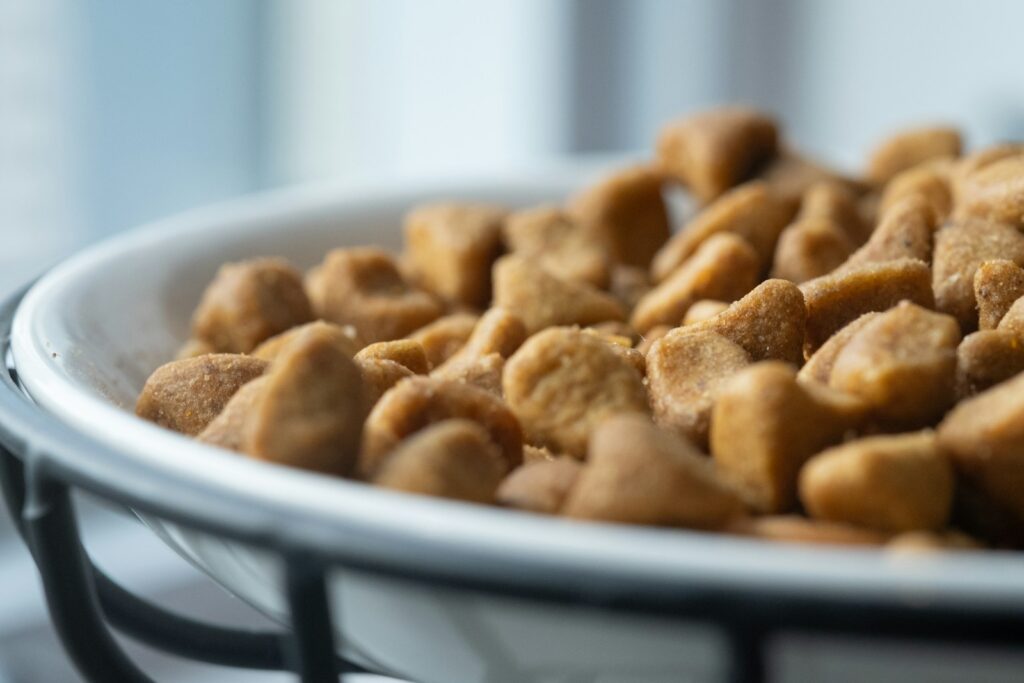
The dog and cat food market in France has been experiencing structural growth for several years, driven by a large pet population. The country has 16.7 million cats and 9.7 million dogs, present in more than one in two households. Dogs and cats account for the vast majority of demand for pet food, with consumption being overwhelmingly industrial.
Sales benefit from a continuous increase in the budget that households allocate to their pets. They are also supported by the upgrading of products, the diversification of revenue streams, and increased attention to animal health and well-being.
The French market is part of a favorable European dynamic, characterized by a strict regulatory framework, strong industrialization, and intense competition. It remains largely dominated by a few international groups, while also welcoming new players. These new entrants are focusing on direct-to-consumer, omnichannel, and highly differentiating models.
You need a comprehensive market study? EPSIMAS will take care of it for you!
In 2024, revenue in the French pet food market reached 6.6 billion euros, up 3% year-over-year, according to the Promojardin-Promanimal association. Revenue for French companies registered under the NAF code 10.92Z (Pet Food Manufacturing) is also projected to grow at an average annual rate of 6.1% between 2015 and 2024.
This market is driven by the dog and cat segments, which are particularly promising. In 2024, the «dog» segment saw year-over-year growth of 3%, and the «cat» segment saw growth of 5%. Within these segments, treats are also showing promising momentum for industry players.
Household spending on pets and related products shows no signs of slowing down. In 2024, INSEE estimates household spending in this area at more than 8 billion euros. Between 2015 and 2024, this spending grew at an average annual rate of 4.9%. Despite a slight slowdown in 2024, EPSIMAS projections indicate that this growth will continue at an average rate of 3.5% per year between 2024 and 2029.
Sources: Animal's promotion, Epsimas, Insee

The pet food market offering is structured around several segments: dry food, wet food, semi-moist food, treats and snacks, as well as veterinary diets. Dry food dominates in volume, while wet food and treats show higher growth dynamics, supported by premiumization and pet humanization.
The market is highly concentrated. Nestlé (through its Purina brand) and Mars (through several brands, including Royal Canin, Whiskas, and Pedigree) account for more than 50% of the domestic market by value. At the same time, independent players are gaining visibility. Ultra Premium Direct reported 67.3 million euros in revenue in 2024, representing a 21% year-over-year increase.
Mass-market retailers remain the primary purchasing channel. In 2025, 50% of dog owners and 69% of cat owners will buy pet food at large and medium-sized supermarkets. Specialty pet stores rank second, accounting for 32% of purchases by dog owners and 24% by cat owners. After several years of rapid growth, online sales are leveling off. They account for 28% of dog owners and 21% of cat owners.
In 2025, 61 % of French people own at least one pet, and 53 % own a dog and/or a cat. France is home to 16.7 million cats and 9.7 million dogs, confirming the predominance of these two species in households.
Ownership varies greatly among households, depending on their living environment. Households living in houses or with a garden or terrace have twice the ownership rates of those living in apartments without outdoor space. Rural and suburban areas also have a higher concentration of owners than densely populated urban areas. Age and household composition are other criteria favoring pet ownership. Young households and large families more frequently own pets. This correlation is particularly pronounced for dogs.
Food expenses are the largest budget item related to.
In 2025, product premiumization is fueling market value growth. Products emphasizing ingredient quality and transparency are in demand. The focus is on formulations perceived as more natural and less processed.
The humanization of animals supports the development of functional treats, age- or need-specific recipes, and products inspired by human food. Wet food is receiving increased attention, particularly for cats, in connection with veterinary recommendations on hydration.
Environmental expectations are also evolving. Industrialists are increasingly valuing co-products, reducing their carbon footprint, and developing more responsible packaging. Alternative proteins, although still marginal, are generating growing interest. Finally, regulatory vigilance strongly frames claims. Scientific credibility, the conformity of marketing discourse, and transparency are becoming determining factors for trust and commercial performance.
Sustainability is a central issue in the pet food market in 2026. The industry values co-products not intended for human consumption, aligning with a circular economy approach that meets European objectives. However, competition for certain strategic raw materials, particularly Category 3 animal fats, is creating supply tensions.
The regulatory framework is strengthening. Health safety, traceability, labeling, and claim control requirements are imposing increased rigor on manufacturers. Mentions related to health, naturalness, or specific diets are subject to increased scrutiny to limit deceptive practices.
The proliferation of brands intensifies competitive pressure. Not all of them will manage to reach critical mass in a market dominated by a few major groups. Product innovation, cost control, scientific credibility, and consistency of promises become key factors for long-term survival.
In the medium term, market growth relies more on value than on volume. Increases in budget per animal, premiumization, and evolving societal expectations are the main drivers of sector development by 2030.
Pet food producers are generally registered under the NAF code 10.92Z: Manufacturing of pet food.
This subclass includes:
This subclass does not include
However, businesses specializing in selling pet products are more generally registered under the NAF code 47.76Z: Retail sale of flowers, plants, seeds, fertilizers, pets, and pet food in specialized stores.
This subclass includes:
Retail trade of flowers, potted or cut, and floral arrangements, plants, and seeds
Retail sale of plants, trees, and shrubs
retail sale of fertilizers and plant protection products retail sale of pet animals, food and accessories for pets
pet, pet food, and pet supply retail
Source : INSEE
Don't hesitate to contact us to discuss your projects!
You can leave us your contact information via the Contact form, or book an appointment directly below.