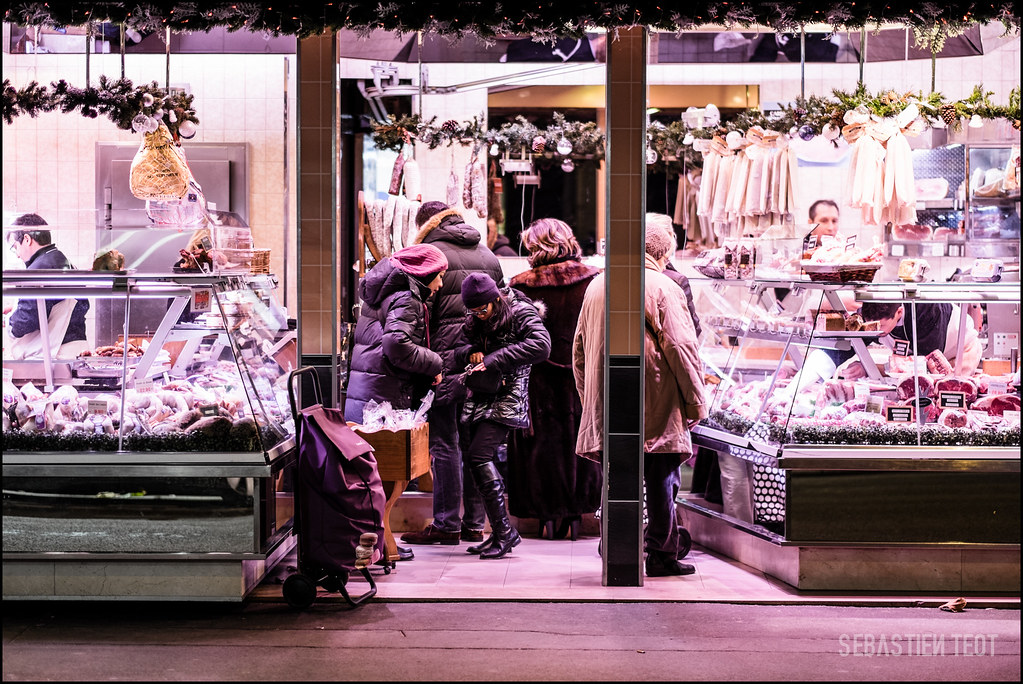
The butcher shop market in France has proven to be particularly resilient. However, the situation is complex, following years of inflation-related pressures and the long-standing dominance of large retail chains, which still account for approximately 80 % of the market share. Numerous challenges remain, as consumers are now structurally concerned about animal welfare and the environmental impact of their food choices.
Paradoxically, while individual meat consumption has been declining for many years, the turnover of the artisanal sector has continued to grow since 2015. This dynamism is currently driven by a shift from quantity to quality, as well as by a transformation of the butcher's trade. The range of products offered by butchers has diversified, with more processed foods, prepared meals, and even various grocery items.
So, how is the butcher shop market managing to maintain such growth despite changing dietary habits?
Do you need market research on the butcher shop sector? EPSIMAS can handle it for you!
In 2025, the butchery market (NAF code 4722Z) generated revenue of 9.1 billion euros, according to preliminary estimates from EPSIMAS. This represents a 6.09% increase on a rolling-year basis. In 2026, there will be no fewer than 19,799 butcher shops operating in France. The number of butcher shops is on the rise, as is the sector’s revenue. Average revenue per butcher shop will therefore be a key indicator to monitor in the coming years, during a period marked by a decline in meat consumption by volume. The median revenue of a butcher shop currently stands at 604,742 EUR excluding tax (based on a study conducted between 2022 and 2024, involving a sample of 918 butcher shops). In 2023, the average revenue of a butcher shop is estimated at 672,563 EUR excluding tax.
While the average per capita meat consumption had reached a low of 83.3 kg carcass weight in 2023, it saw a significant rebound to 85.7 kg by the end of 2024, a level that is expected to stabilize in 2025. However, this momentum masks a profound shift in the market: poultry has reached a historic milestone by becoming the most consumed meat in France (31.6 kg per capita), surpassing pork for the first time. Conversely, red meat continues its decline: consumption of beef and veal fell another 3.4 % in 2025, hurt by above-average retail price inflation (+4.9 %).
Sources: FranceAgriMer Report «Meat Consumption in France», ANVOL 2025, Ideal Trends Dairy & Meat, INSEE, EPSIMAS, Adma Expertise

In 2025, the landscape of meat consumption in France reached a historic milestone: poultry became the most widely consumed meat among the French, dethroning pork. While it accounted for only 25.1 % of consumption in 2003, poultry now accounts for 36.9% of the total volume in 2025. Pork, the long-time leader, has seen its share gradually decline from 41.4 % in 2003 to 36.3 % today. Beef continues its structural decline, falling from 29 % in 2003 to 24.9 % of total consumption.
Household purchases of meat products (for home consumption) stabilized at around 2 million metric tons in 2024, with total spending rising to 26.8 billion euros due to inflation. The average purchase price of meat is now estimated at 13.40 EUR per kg (across all retail channels). Against this backdrop of pressure on purchasing power, consumers remain cautious regarding quality labels: the share of organic products has stagnated at 3.8% in Q1-Q3, and that of Label Rouge at 15% in Q1-Q3, as households prioritize French origin and affordable prices over more expensive labels.
Sources: FranceAgriMer – Consumption Report, Kantar Worldpanel 2025, Agencebio
It is possible to segment the offering in the butcher shop market based on the type of players:
«Pure» butcher shops» These actors focus almost exclusively on raw meat. Faced with aggressive competition from supermarkets and declining fresh meat volumes, this model is becoming marginal and only survives in the very high-end segment or in isolated rural areas.
Butcher shops – delicatessens This model has become the industry standard. By incorporating charcuterie, often homemade, artisans manage to stabilize their profit margins and increase the average transaction value, thus compensating for the decline in foot traffic for traditional beef cuts.
Butchers – Delicatessens – Caterers This is the segment that will experience the strongest growth in 2026. Catering (prepared meals) and snacking (gourmet sandwiches, take-away burgers, rotisserie) is becoming a vital necessity. This diversification aims not only to increase the average basket size but, above all, to capture the active lunch crowd and younger generations (Gen Z) looking for quick and high-quality meal solutions.
In 2025, the dominance of large-scale retailers remains strong but is leveling off: large and medium-sized supermarkets hold approximately 86.8 % of the market share for all meat products (fresh, deli, and frozen). Artisanal butcher shops now account for 8.9 % of total sales, driven by their deli offerings. In the fresh products segment alone (excluding deli meats and frozen products), butcher shops maintain their position with an 11.2 % market share, while large and medium-sized supermarkets account for 82.5 % of sales.
Sources: Epsimas, FranceAgriMer – Consumption Report, Backcountry
Unsurprisingly, the butcher sector experiences a marked seasonality dictated by the calendar of festivities and the climate. Google Trends data confirms that consumers« main periods of interest are between July and August, driven by the »barbecue season," as well as in December, during the major annual peak associated with the year-end holidays.
The month of April (Easter period) remains a strong moment of the year, although interest is more focused on specific cuts like lamb, making this peak less significant than those in summer or at Christmas. Since 2024, there has also been an increase in searches during the long weekends in May, confirming that butcher shop activity is now increasingly weather-dependent. The graph below shows French Google search interest for the term «boucherie» (butcher shop), illustrating these recurring consumption cycles.
Source : Google Trends
The butcher shop market has shown steady growth over the past ten years, with an average annual growth rate of 5.52% between 2016 and 2025. This trend, which may seem paradoxical given shifts in consumer behavior, can be explained by four strategic drivers:
A high value-added product mix: Butchers are no longer content with selling raw meat. They are increasing their offerings of prepared (ready-to-cook) products, catering services, and snacks. This «premiumization» strategy mechanically increases the average transaction value, thereby offsetting the decrease in purchase frequency for certain expensive cuts of beef.
Territorial Network Densification: With nearly 19,799 active establishments in 2026, the sector benefits from an increase in the number of points of sale. This vitality of supply supports the sector's overall revenue, although it requires increased monitoring of the profitability of each individual unit.
Consumer interest in proximity: Despite the dominance of supermarkets, artisanal butcher shops are benefiting from a return to short supply chains. Consumers, seeking transparency about origin (traceability) and personalized advice, value the butcher's expertise. This relationship of trust allows artisans to maintain a loyal customer base, willing to pay a price difference for perceived superior quality.
Sources: Epsimas, INSEE, FranceAgriMer
Don't hesitate to contact us to discuss your projects!
You can leave us your contact information via the Contact form, or book an appointment directly below.