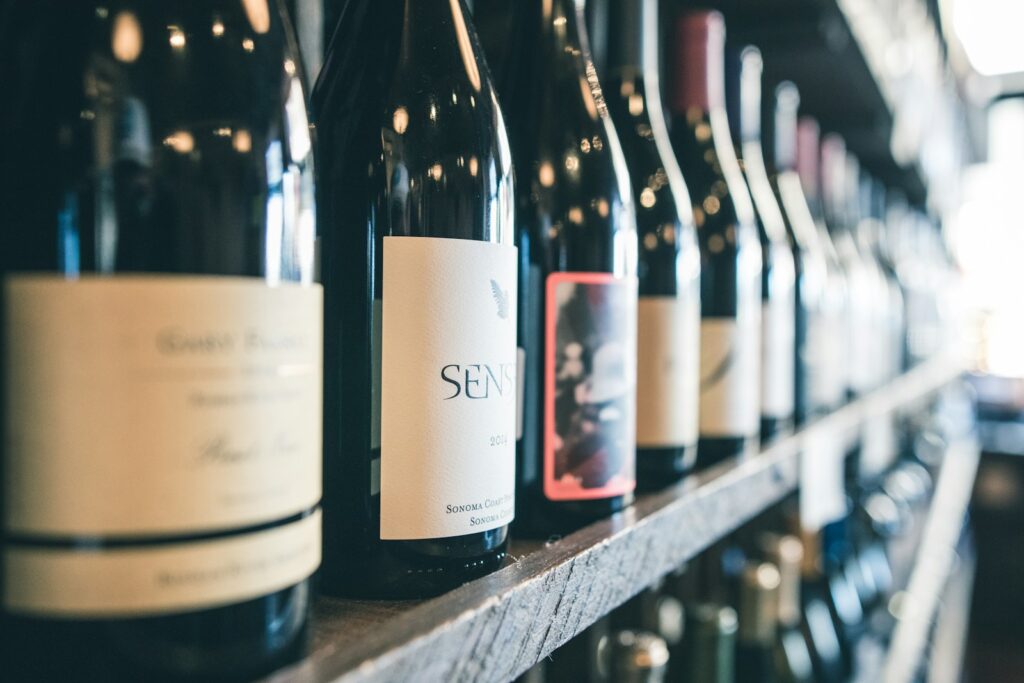
Wine holds a central place in French culture: more than just a product, it represents a true heritage. France has a particularly well-developed wine sector, with a total turnover of 92 billion euros. Despite strong international competition, notably from Italy and Spain, French wine continues to be exported and to captivate. Meanwhile, the wine merchant market (NAF code 47.25Z) continues to grow, reaching over 2.6 billion euros in 2025 according to EPSIMAS estimates. However, on the domestic market, an underlying trend is emerging: since 2012, annual wine consumption per capita has been declining. This drop is not necessarily synonymous with a lack of interest, but rather reflects an evolution in consumption habits.
The wine sector, from production to distribution, is therefore undergoing major changes. The number of businesses in the industry has been declining since 2016, and stakeholders must now adapt to a more demanding market, against the backdrop of an overall decline in alcohol consumption in France.
Do you need market research on the wine merchant sector? EPSIMAS takes care of it for you!
The market for retail beverage establishments in France has shown continuous growth for over 25 years, despite a one-off decline in 2020. Between 2023 and 2024, a moderate drop in the sector's turnover was observed. Despite this setback, the upward trend remains over the past ten years. In 2025, the turnover of retail beverage businesses was estimated at over 2.6 billion euros in France, according to preliminary estimates. This represents an average annual growth rate of approximately 6.6% over the past ten years. Individual alcohol consumption has nevertheless been declining for many years in France, and the wine sector is not spared.
In this context, the wine shop market remains central: according to a study by Bonial and OpinionWay, 33% of French people consider wine shops to be the ideal place to find a good bottle. Furthermore, the product offering itself is evolving, driven in particular by the rise of organic wine: by 2023, 22 % of France’s vineyards will be cultivated using organic farming methods, representing more than 10 700 producers spread across the country. Faced with a decline in consumption volume, industry professionals are focusing on a shift toward higher-end products. Between 2015 and 2025, the average price per liter of wine rose by more than 25%, representing an average annual growth rate of approximately 2.5%.
Sources: INSEE ; FNB 2023 ; Sitevi; Bonial / OpinionWay 2021 ; Wine and Society

In 2025, wine continues to hold a prominent place in the drinking habits of the French. With a preference rating of 58 %, it remains the favorite alcoholic beverage, ahead of beer (56 %) and champagne. Nevertheless, the popularity of the top two beverages has declined slightly compared to 2024 (-2 points), reflecting an overall decline in alcohol consumption.
Preferences vary widely depending on demographic profiles. Among men, the preference for wine is on the rise (67 %, +3 points), while among women, it has fallen to 50 % (-6 points). Among 18- to 25-year-olds, there has been a resurgence of interest, with a 6-point increase (45 %), accompanied by growing enthusiasm for cider (+7 points) and straight spirits (+4 points). Conversely, the 26- to 35-year-old age group shows a marked decline in interest, with wine dropping from 59 % to 48 %; this age group is now the only one to rank beer as its top choice among alcoholic beverages.
Red wine remains the most commonly consumed wine with meals (78 %), although this figure has declined slightly (-3 points). White wine (50 %) remains stable, and rosé (49 %) gains one point. Orange wine is more popular in social settings (26 %).
The occasions on which wine is consumed confirm its association with socializing. It is mostly consumed in the evening and on weekends (68 %, up 8 points since 2022) and at Sunday lunch (48 %, down 4 points). During the week, consumption remains more modest. The reasons for drinking remain consistent: pairing wine with food (45 %), socializing (40 %), and the pleasure of taste (39 %). New eating habits such as cocktail dinners or fragmented meals are paving the way for new uses, notably through more portable formats, such as cans.
At the same time, abstinence is gaining ground. In 2025, the proportion of non-drinkers reached 17 % (+3 points). This increase was particularly pronounced among women (+6 points, to 23 %). It remains stable among 18- to 25-year-olds (22 %), but rises slightly among 26- to 35-year-olds (18 %, +1 point). Si 80 % of French people still drink wine at least once a year; this proportion is down 2 points from 2024 and 5 points over the past decade. However, only 4 % of alcohol consumers never drink wine, compared with 14 % who never drink spirits—proof that wine continues to hold a strong symbolic place in French food culture, even as drinking habits are evolving.
Sources: 2025 Sowine / Dynata Barometer
The trend toward low-alcohol or non-alcoholic («no/low») beverages continues to grow in France. In 2025, 29 % of French people will consume them, mainly to reduce their alcohol intake (42 %), take care of their health (39 %), or simply for the pleasure of the taste (37 %). This trend is more popular among women (33 %) than men (25 %), and is particularly popular among 18- to 25-year-olds, 45 % of whom report consuming it, compared to only 18 % among 50- to 65-year-olds.
Environmental concerns are also becoming increasingly embedded in purchasing behavior. In 2025, 51 % of French people report that they always or almost always check environmental labels before buying a bottle of wine. 69 % have already purchased a wine with an environmental label, although for most, this remains an occasional practice.
This attention is particularly noticeable in:
On the digital front, online wine purchases are expected to stabilize in 2025 at 34 % of consumers. Although this figure is slightly lower than that of 2023 (38 %), the number of regular buyers and heavy buyers is on the rise.
The average budget, meanwhile, is trending downward, now ranging from €31 to €50 per bottle. However, the number of consumers spending more than €20 per bottle is on the rise (25 %, up 3 points from 2024).
People under 35 remain the most avid users of this channel, with a strong appetite for online ordering.
Sources: 2025 Sowine / Dynata Barometer
The competition faced by wine merchants is particularly intense and comes from several distribution channels. First, large and medium-sized supermarkets represent major competitors. They offer a wide selection of wines at competitive prices, easily accessible during everyday grocery shopping, which appeals to a clientele looking for convenience and value for money.
Specialized retailers, particularly national chains (such as Nicolas or Repaire de Bacchus), are also competing with independent wine merchants. Their strength lies in an image of expertise, personalized advice, and a structured offering, often supported by powerful marketing tools.
Finally, online sales platforms are experiencing steady growth and transforming purchasing behavior. They offer a wide variety of references, attractive prices, fast deliveries, and innovative services such as subscriptions or private sales. Producer websites, generalist marketplaces, and digitalized wine merchant websites thus reinforce this competitive pressure.
Sources: EPSIMAS
The wine retail sector in France is operating in a mixed landscape. Independent retailers still account for the majority of the market (about 75 %), but chain stores are growing rapidly and now account for a quarter of the sector. What’s their strength? A solid brand image, well-established logistics, and centralized purchasing—all advantages that are helping them gain ground.
For independent wine merchants, the challenge is therefore clear: remain competitive by adapting to the expectations of a rapidly evolving clientele. Because today, people drink less, but they drink better. Consumers are looking for quality, authentic products that carry meaning.
Faced with this, several levers allow you to stand out:
Highlighting independent winemakers and lesser-known terroirs,
Offer organic, natural, or biodynamic wines,
Creating in-store experience: tastings, workshops, meetings with producers,
Playing the personalized advice card, a major asset against more standardized offers.
Digitization, still underutilized by wine merchants, also represents a growth avenue: presence on social media, online sales, loyalty tools... These are solutions that help strengthen customer relationships and reach a new audience.
In a rapidly transforming market, wine merchants who manage to combine authenticity, expertise, and a sense of service will have all the keys to stand out.
Sources: Propulse by CA; EPSIMAS
Subclass 47.25Z Retail sale of beverages in specialized stores
This subclass includes:
This subclass does not include:
Source : INSEE
Don't hesitate to contact us to discuss your projects!
You can leave us your contact information via the Contact form, or book an appointment directly below.