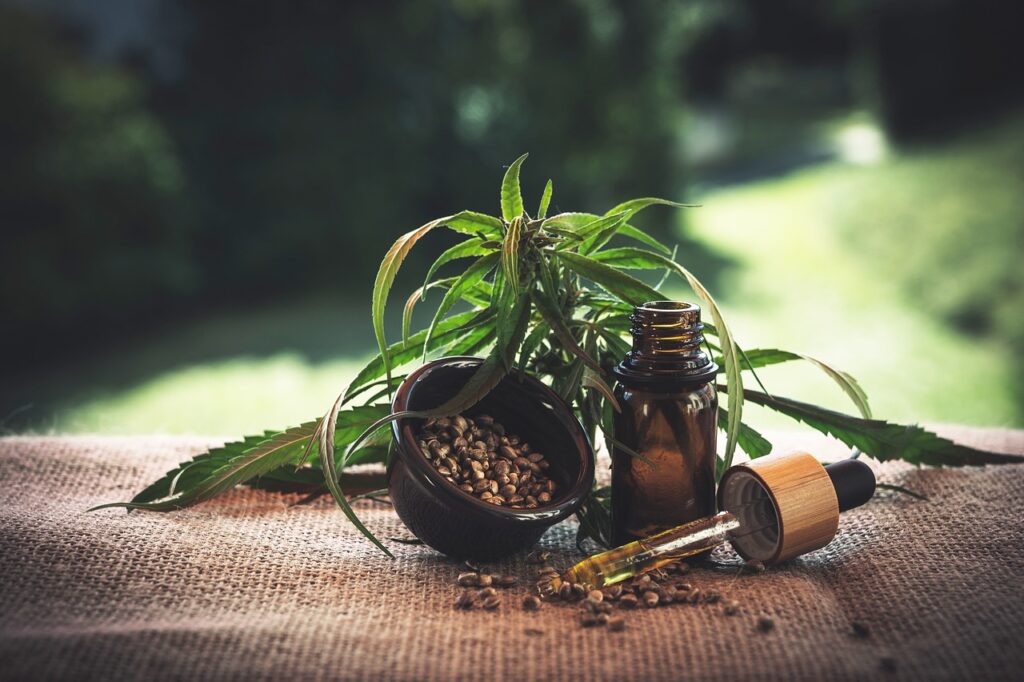
Cannabidiol, more commonly known as CBD, is experiencing growing popularity in France. This compound, extracted from hemp, is renowned for its therapeutic benefits without psychoactive effects. The market for CBD-based products is developing rapidly, attracting many entrepreneurs and merchants. Estimates of the CBD market's turnover in France vary depending on the organization. The French Professional Hemp Syndicate (Syndicat Professionnel du Chanvre) estimates the market's potential in France at around 1.5 billion euros. In 2023, Xerfi estimated the market to be worth 600 million euros. The boom in this market is also perfectly reflected by the high penetration rate of CBD-based products. This article explores current trends, challenges, and opportunities in this booming sector.
Do you need market research on the CBD sector?
CBD’s popularity continues to grow in France, thereby boosting the market for CBD-based products. In 2022, 71% of French people had heard of CBD, and no fewer than 10% of the adult population had used it—nearly 6 million people. Among the 18–34 age group, this penetration rate stands at 17.5%. The penetration rate is also higher among men than among women. Driven by demand, the CBD market is projected to reach approximately 600 million euros in 2023, according to Xerfi estimates. This represents a 50% increase compared to 2022, when the market was estimated at 400 million euros.
CBD products are increasingly associated in consumers' minds with wellness and relaxation products. CBD is thus gradually separating itself from the image of cannabis, although some consumers see it as a substitute for THC. Hemp flowers, oils, creams, e-liquids, and CBD-based dietary supplements are among the most sought-after products. This trend is supported by increasingly favorable legislation and a growing social acceptance of CBD.
SSources: Public Health France ; INSEE ; EPSIMAS ; Xerfi ; CBDEAU

The specialized press of the sector allows CBD market players to stay informed about industry developments (market trends, regulatory changes, new products, etc.). The main media outlets to follow in France are the following:
CBD News Specialist magazine, defining itself as the first legal hemp magazine
CBDBUSINESS Quarterly review intended for industry professionals, defining itself as the leading CBD magazine in France
The CBD Guide #1 Guide in France to find a shop, a product or information
CBD VITAL Magazine specialized in CBD and hemp news and new products
Sante.gouv.fr Ministry of Health, on which CBD regulations depend
Public Health France Organization publishing surveys and reports on public health issues
Over the past five years, French interest in CBD has continued to grow through 2022. At the end of 2021, a decree was issued banning the production and sale of cannabis flowers and leaves with a THC content below 0.3%. This decision was subsequently overturned by the Council of State (see 4. Regulations). In the weeks following this publication, a spike in French interest in the subject was observed. Since then, consumer interest has followed a downward trend before stabilizing starting in 2023.
CBD-based products have been authorized as hemp extracts in France since late 2020. In December 2021, an interministerial decree authorized «the use of the flowers and leaves of only those cannabis varieties with a delta-9-tetrahydrocannabinol (THC) content of 0.3 % or less, to produce extracts that themselves comply with this limit » (Council of State). However, this same decree simultaneously prohibited the sale to consumers of the «raw» flowers and leaves of these same varieties.
Effective January 24, 2022, this order was suspended by the Council of State, which had been asked to rule on the matter as a matter of urgency following the ban. It was not until the end of 2022 that the Council of State definitively overturned the decisions in this decree, ruling that the decision to impose a general and absolute ban was disproportionate. As of today, CBD-based products, as well as hemp extracts with a THC content of less than 0.3%, are authorized for consumption and sale in France.
However, the regulation of these products remains to be monitored. Starting in June 2024, several synthetic cannabinoids are banned from sale in France, following a decision by the ANSM. This decision does not concern CBD, but illustrates the crucial importance of establishing regulatory monitoring for industry stakeholders.
SSources: Légifrance ; Council of State ; ANSM
Despite the numerous opportunities in the CBD market, it presents major challenges. Competition is intense in the sector, with many players entering the market. A few brands are expanding in the market through franchising. Distribution channels are multiple, and most brands opt for multi-channel distribution (specialized stores, online shops, marketplaces, tobacco shops, pharmacies, etc.). Awareness and marketing campaigns must be well thought out to stand out. Furthermore, companies must constantly stay informed of regulatory changes. As previously mentioned, regulatory monitoring is essential in this sector.
Finally, transparency and product quality are crucial to earning consumer trust. The fact that consumers associate these products with the wellness sector means they have higher expectations. A MILDECA study conducted between 2022 and 2023 on 223 randomly purchased products concluded that 81% of the products analyzed had CBD levels that did not match their labeling. Furthermore, only 46% of the products listed their ingredients on the label. [This study was conducted on products purchased in July 2022 and April 2023, from referenced stores, through various distribution channels and in 3 different regions.
Don't hesitate to contact us to discuss your projects!
You can leave us your contact information via the Contact form, or book an appointment directly below.