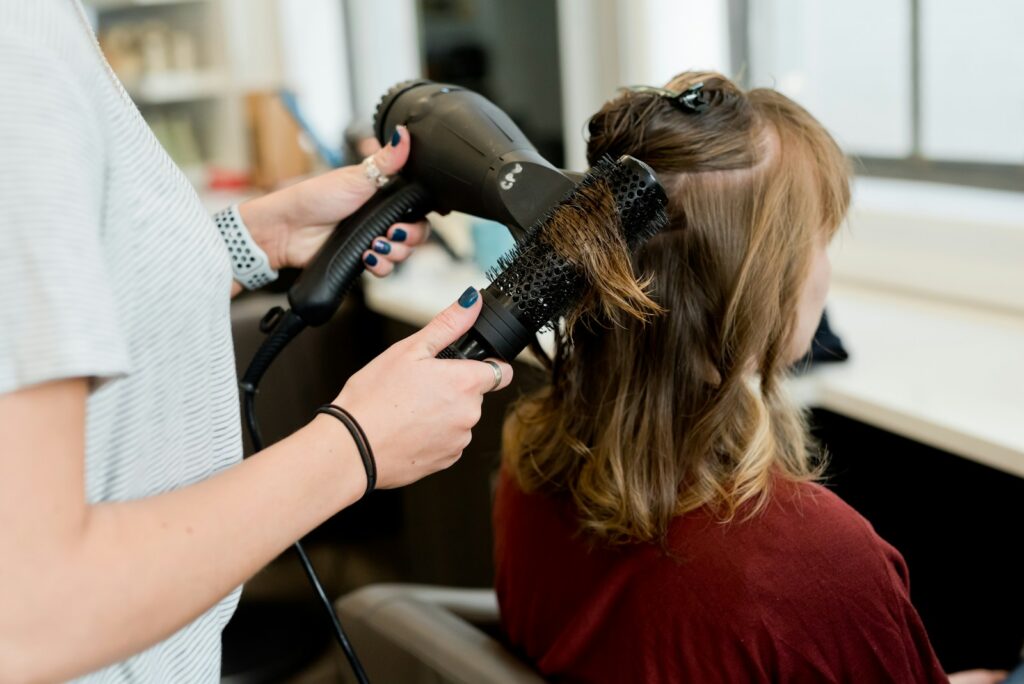
The hairdressing market has been on an upward trend for over 20 years. This sector encompasses all activities related to cutting, maintaining, coloring, and caring for hair. It includes both classic services (cuts, blow-dries, coloring, perms, straightening, etc.) as well as complementary services (hair treatments, event hairstyling, barber services, sale of professional products). This sector is primarily segmented by customer type (men, women, or mixed). However, in order to differentiate themselves, many concepts are now focusing more on the customer experience. An experience that goes beyond the simple service (reception, atmosphere, ambiance, etc.).
In 2025, the hairdressing sector achieved a turnover of more than 7 billion euros. The demand is notably driven by the men's segment, and the increasing interest of men in their appearance. In 2023, the UNEC observed a slight decrease in attendance, particularly in the women's segment. However, this decrease in attendance is offset by an increase in the average ticket price for men, and a relative stability in the average ticket price for women.
Do you need market research on the hairdressing sector? EPSIMAS will take care of it for you!
In 2023, companies in the hairdressing sector generated a turnover of 6.7 billion euros. According to the first estimates from EPSIMAS, The market will be valued at 7 billion euros in 2025.. This represents an average annual growth rate of 1.85% eBetween 2016 and 2025. Beyond turnover, the hairdressing sector has also seen a growing number of professionals for many years. As of January 1, 2026,The number of active establishments registered under NAF code 96.02A (Hairdressing) is 113,702, including 10,477 created in 2025.
The average per-customer ticket (estimated) in 2025 is 42 EUR for hair salons (men and women combined). This average ticket continues to rise (it was estimated at 37.9 EUR in 2022 and 40.4 in 2024). In 2023, the sector’s revenue is broken down as follows: 75% from the «Women’s» segment and 25% from the «Men’s» segment. The average transaction value for Women in 2023 is estimated at 52.6 EUR, compared to 27.8 EUR for Men. It should be noted, however, that the «Men» segment is growing rapidly (both in terms of revenue generated and average transaction value).
On average, a customer visits the same establishment 3.26 times per year. In 2023, the average number of male visits per day per active person is estimated at 2.32, compared to 3.7 for women.

In France, female hair salon customers tend to spend more per visit than men (the average bill for women is nearly twice as high as that for men). 80% of visits by female customers are for a haircut. However, it should be noted that in nearly 50% of cases, «treatments» are requested. It is worth noting that in 2023, this segment saw a decline compared to 2022, for both haircuts and treatments.
Male consumers account for a smaller share of hair salon revenue in France than women do. However, their share of the hair care market is on the rise. Demand in this segment is driven by consumers’ growing interest in beauty-related topics. 86% of men’s visits to hair salons are for haircuts. The UNEC also notes that 14% of male clients visit hair salons for beard care. Styling, treatments, and coloring remain a minority of men’s requests.
In March 2026, the number of establishments in the sector in France is estimated at 113,859 in operation. The number of establishments continues to
has been growing for many years. Although salons remain undeniably the most common option, in-home hair styling is growing rapidly. Having grown by 2,97% between 2009 and 2023 (in terms of the number of locations), the mobile hairdressing segment has seen rapid growth over the past 15 years.
A higher concentration of establishments in this sector is observed in large French metropolises. It is also worth
note that the density of hair salons per capita is highest on the Mediterranean coast and in Corsica, as well as in
Pyrénées-Atlantiques, in Dordogne, and Charente-Maritime.
The market is divided into independent salons, chain salons, and independent hairstylists (who work from home or rent a station in a salon). EPSIMAS estimates that there will be more than 100 hair salon chains in France by 2025. Among establishments with employees (i.e., those with at least one employee), chain salons account for 20% of the total, compared to 76% for independent salons and 4% for mobile hairdressing services. When including establishments without employees (including sole proprietorships), chain salons account for only 7% of locations, compared to 62.5% for independent salons and 30.5% for in-home hairdressing services.
Sources: EPSIMAS ; SIRENE Base ; UNEC
In France, hairdressing activity follows a distinct seasonality. Peaks in activity are observed in August and, to a lesser extent, December. Conversely, July is the month with the lowest activity (nationally). These peaks coincide, unsurprisingly, with an increase in Google searches for hairdressing.
Outside of these periods (August, December, and July), activity is relatively stable throughout the year. However, it should be noted that this seasonality has tended to be more pronounced over the last ten years.
Several trends are observed in the hairdressing sector in France. On the one hand, there is the rise of DIY («Do It Yourself»), observed in many sectors (not just in the hairdressing market). Hair styling appliances have become more accessible to individuals, and online tutorials and hairdressing video content have also seen a real boom. This trend, although feared by some professionals (seeing it as a substitute for their services), seems to have had a positive impact on the sector, contributing to the development of consumer interest in aesthetics.
On the other hand, for many years, French consumers have tended to seek out more natural, organic, local, and environmentally friendly products in their purchases (not just for haircare). This trend is also observed in the hairstyling and barber market. Consequently, there appears to be a genuine appetite for natural and organic products. Furthermore, some professionals are now certified (for example, «Mon Coiffeur s’engage»).
This sector is essentially made up of companies registered under the NAF code: 96.02A – Hairstyle.
This subclass includes:
Washing, cutting, styling, dyeing, coloring, perming, straightening of hair, and similar services for men and women.
Shaving and beard trimming
This subclass does not include:
Wig manufacturing (cf. 32.99Z)
Source : INSEE
Don't hesitate to contact us to discuss your projects!
You can leave us your contact information via the Contact form, or book an appointment directly below.