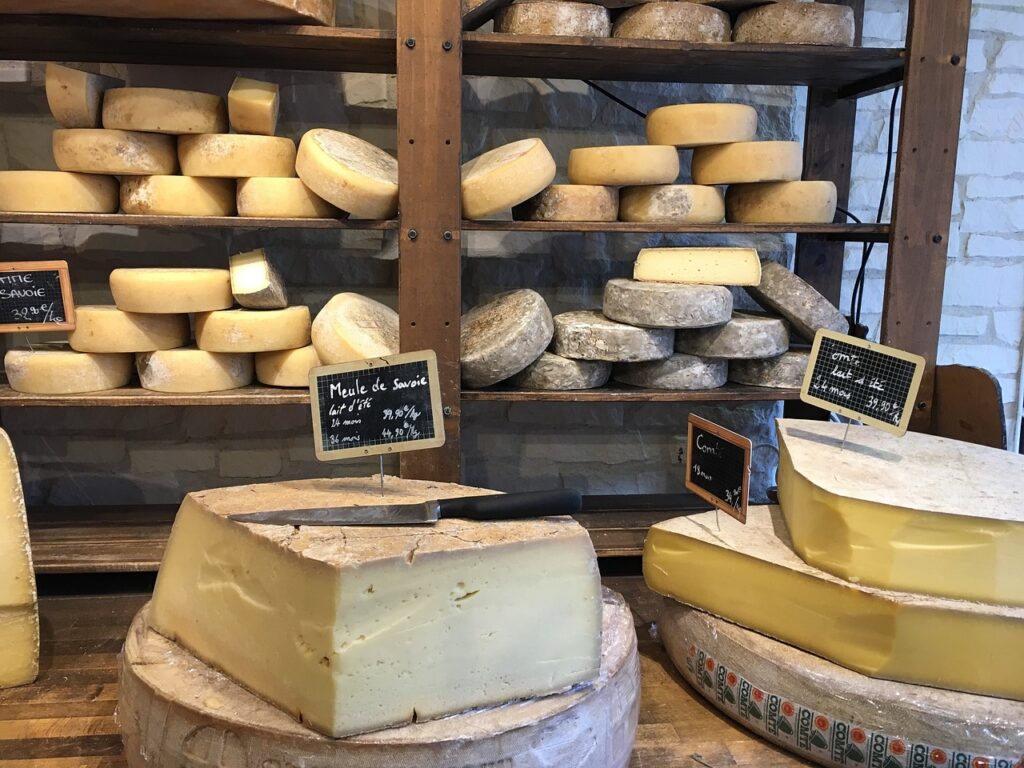
If there’s one product for which France is recognized worldwide, it’s cheese. And for good reason: the French cheese and cheese-making market is among the most developed in the world in 2026. With nearly $4.3 billion in exports in 2024, France has solidified its position as the fourth-largest cheese exporter by value, while maintaining its third-place ranking by volume. At the same time, domestic demand for imported cheese continues to grow strongly. France recorded nearly 3.2 billion USD in cheese imports in 2024, marking a dramatic increase of more than 115 % since 2016.
But what about cheese consumption in France? How is the cheese shop sector evolving in France? And what levers can cheesemongers use to differentiate themselves in this sector, which is so emblematic of French tradition?
Do you need a market study for the cheese shop sector? EPSIMAS will take care of it for you!
The 2025 market outlook confirms the cheese market’s high price sensitivity. Driven by persistent inflation, households are increasingly balancing quality against affordability. This trend benefits private-label brands, which accounted for approximately 40 % of sales volume in 2024, particularly in large and medium-sized supermarkets.
Cheese remains a mainstay of the French dairy industry. In 2024, the French retail cheese market generated more than 10 billion euros in revenue, with approximately 852,000 metric tons sold. As a result, household spending grew by more than 24% between 2019 and 2024. Sales volumes also rose over the period, albeit at a more moderate pace, with an increase of 3.4%.
Cheeses bearing official quality designations continue to play a significant economic role. In 2024, AOP and IGP cheeses—nearly 57 varieties—accounted for approximately 2.7 billion euros, or nearly one-third of the market value. Sales volumes for AOP cheeses exceeded 200,000 metric tons. At the same time, foreign cheeses are also highly popular among French consumers. Imports of cheese and curd in 2024 totaled nearly 3.2 billion USD in France, representing growth of more than 76% over 10 years.
Sources: FranceAgriMer (2024), CNAOL–INAO (2024), Statista, Epsimas

The French remain the biggest cheese consumers in the world, with about 27.4 kg per person per year. However, consumption habits are evolving. Cooked pressed-paste cheeses (Emmental, Comté, Raclette) account for the majority of volumes, while plateau cheeses are slightly declining in favor of more functional products.
Consumption is adapting to new lifestyles. Snacking, portion-sized formats, spreadable cheeses, and products for culinary use (grated, sliced, mozzarella) are on the rise. In 2024, promotions play a structuring role in the purchase decision, especially in supermarkets.
Younger generations express higher quality expectations. Milk origin, geographical proximity, natural recipes, and animal welfare are becoming determining factors. This search for «responsible pleasure» encourages brands and artisans to highlight their expertise and product traceability.
Finally, despite budgetary trade-offs, cheese retains a strong cultural significance. In 2024, nearly 37 % of French people reported eating cheese daily, confirming its enduring place in their dietary habits.
This consumption remains open to Europe: if France exports heavily, it also imports more and more. Italy remains the leading supplier (exceeding 1.1 billion euros in imports), followed by the Netherlands and Germany, confirming a growing attraction among the French for foreign specialties which now complement the traditional cheese board.
Sources: FranceAgriMer (2024), Cheese and Dairy Products Fair , Federation of French Cheesemakers (2025), OEC, Statista
French cheese offerings are distinguished by exceptional diversity. There are over 1,500 varieties of cheeses, categorized as soft, pressed, blue-veined, fresh, or stretched curd. This richness illustrates the attachment to regional terroirs and know-how, recognized by 46 AOPs and 11 IGPs in 2024.
An IFOP study conducted for the Federation of French Cheesemongers identifies four main models of cheese shops: «terroir» cheese shops, family-run cheese shops, bistronomic concepts, and gastronomic houses. These independent businesses play a key role in promoting quality products and short supply chains. Expertise and advice are the main differentiating factors for these businesses compared to large retailers.
Nevertheless, mass retail remains the primary sales channel. In 2024, supermarkets accounted for 70 to 75 % of sales volume, with self-service dominating the market. The deli counters are holding their own thanks to product displays, the expertise of sales staff, and the promotion of regional specialties. In parallel, major industrial brands are structuring the mass market and ensuring high product availability. They coexist with a dynamic artisanal offering, particularly in urban areas.
Sources: IFOP – Federation of French Cheesemakers (2024), FranceAgriMer (2024), CNAOL–INAO (2024)
In 2024–2025, consumer expectations are centered around transparency. The origin of the milk, farming practices, carbon footprint, and production conditions are increasingly influencing purchasing decisions. The product's story, origin, and packaging are thus becoming drivers of differentiation. As a result, plastic reduction and eco-design of packaging are strategic challenges for the sector. In 2025, several players are also testing recyclable, compostable materials or deposit systems.
Innovation and tradition coexist. Plant-based cheeses continue to experience double-digit growth, for a market estimated at around €70 million in 2024, although their share remains marginal. Lactose-free cheeses, enriched with protein or low-fat versions also meet new demands. Usage is also evolving: ready-to-cook recipes, fresh snacking, mini formats, or flavored cheeses.
Seasonality remains pronounced, with peaks for raclette and fondue cheeses in winter, and for fresh and goat cheeses in spring-summer. Significant peaks in consumer interest for cheese shops occur around the year-end holidays. Beyond these holidays, August is also a favorable month for consumer interest, with less pronounced peaks, however. The graph below shows Google search interest for the topic of cheese shops in France.
Sources: FranceAgriMer (2024), Epsimas, Federation of French Cheesemakers (2025), Google trends
The activity of cheese shops and dairy shops is mainly attached to NAF code 47.29Z – Other retail sale of food in specialized stores. This code covers stores specializing in the sale of food products, including cheeses, outside of large-scale distribution.
Industrial processing activities fall under NAF code 10.51C – Cheese making, used for production companies.
Class 47.29Z: Other retail sale of food in specialized stores
This subclass includes
Subclass 10.51C: Cheese Manufacturing
This subclass includes:
This subclass also includes:
This subclass does not include
Sources: INSEE
Don't hesitate to contact us to discuss your projects!
You can leave us your contact information via the Contact form, or book an appointment directly below.