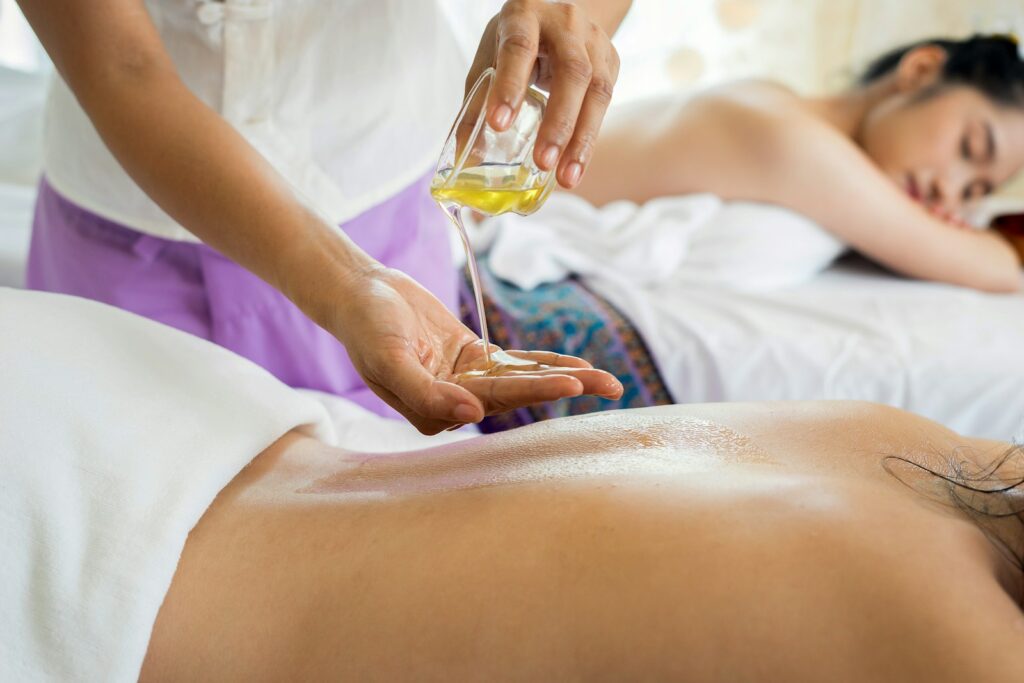
The spa market in France is undergoing an unprecedented phase of consolidation and upgrading. This sector encompasses all services aimed at well-being, relaxation, and physical comfort. Today, it is worth over 3 billion euros. Demand is evolving towards an increasingly holistic approach, where care is no longer limited to aesthetics but has become an issue of preventive health. To meet these new expectations, industry players are diversifying their offerings, integrating cutting-edge technologies while capitalizing on traditional expertise. Between urban spas, hotel spas, and thermal centers, the competitive landscape is restructuring to transform each establishment into a true destination for rejuvenation.
Do you need a market study for wellness spaces? EPSIMAS can handle it for you!
According to Xerfi, the spa market is estimated at more than 3 billion euros in France in 2024. Nevertheless, assessing the economic weight of well-being in France is complex, as the aesthetics, self-care, leisure activities, and health sectors are difficult to separate. In this market, the body care segment (NAF code 96.04Z) generated over 1.1 billion euros in 2025. The sector's turnover has been growing since 2021. is expected to increase by 3.70% between 2024 and 2025...
Over a longer period (2016–2025), average annual growth is expected to stabilize at 3.36%. However, caution is warranted in the medium term: projections through 2030 anticipate a slight slowdown in this growth. The spa market remains highly fragmented, consisting of numerous small, independent operators. On average, a spa’s revenue is estimated at 44K EUR in 2023 (NAF code 96.04Z). However, certain concepts stand out—particularly in the franchise sector—and easily exceed 500K EUR per location. These significant disparities in performance can be partly explained by location choice, the business concept, and the various marketing strategies adopted.
Sources: Xerfi, app.epsimas.com, INSEE

The sociological profile of wellness center users in France is undergoing a profound transformation, moving away from the idealized image of luxury reserved for a female elite. While women have historically remained the mainstay of the market, accounting for about 75 % of the clientele, their motivations for purchasing are shifting toward a pursuit of «holistic health» rather than mere aesthetics.
In 2023, the consumption pattern reveals increased loyalty to core services: waxing accounts for 20 % of revenue, serving as a recurring loss leader, while facials (16 %) and manual body treatments (13.5 %) drive profitability upward. These increasingly well-informed consumers now demand complete transparency regarding the origin of products and the ethical standards of treatment protocols.
The real breakthrough, however, comes from the dazzling emergence of the male segment. Long in the minority, men today are showing a strong increase in attendance. They are no longer content to accompany, but are becoming active consumers, primarily attracted by technical facilities such as saunas, hammams, and cryotherapy devices for sports recovery or professional stress management.
The competitive landscape of well-being in France is characterized by a dense network of independent practitioners, but more importantly by the emergence of powerful networks that dictate quality standards. The market is segmented into four main categories of players: urban spas, hotel spas, thalassotherapy, and medically-oriented thermalism.
In the field of thermalism, historical groups like La Chaîne Thermale du Soleil largely dominate. They manage to modernize renowned resorts, such as Vichy or Aix-les-Bains. To achieve this, they now integrate nutritional coaching and mindfulness programs. Thalassotherapy is supported by brands like Thalazur or Accor. These groups capitalize on the virtues of seawater to attract a high-end clientele.
The hotel spa segment is arguably undergoing the most strategic transformation. Groups like Accor and Relais & Châteaux have understood that the spa is no longer a simple ancillary service, but a driver for occupancy and upgrading. The initiative by Brit Hotel is telling in this regard. The brand systematically integrates spas into its establishments. The objective is twofold: to attract leisure clientele on weekends and justify higher overnight rates.
This «destination» strategy transforms the hotel into a comprehensive stay where the client can indulge in multiple treatments without leaving the premises. Faced with this marketing and logistical firepower, independent massage parlors and fitness centers must differentiate themselves. Specialization (single-product concepts, niche treatments, exclusive technologies like IRL lamps) becomes their only weapon to retain a loyal local clientele. Competition is therefore no longer solely based on price, but on the ability to offer a memorable, immersive, and technically flawless customer experience.
Current trends are dictated by three major areas. First, the expansion of the offering: we no longer just sell a massage, but a benefit (better sleep, recovery after exertion, detoxification). The integration of devices such as cryotherapy or high-tech treatments allows for strengthening the positioning or diversifying services.
Secondly, Corporate Social Responsibility (CSR) is becoming a selection criterion for customers. Thermal spas, which consume a lot of water and energy, are multiplying initiatives to reduce their environmental footprint. The objective is to transform this imperative into a marketing argument for sustainability.
Finally, influencer marketing and digital presence are redefining the client relationship. Social media is no longer just for showing pictures of pools, but for dramatizing the treatment experience and humanizing practitioners. «Wellness» influencers play a role as essential prescribers for attracting younger generations (Gen Z and Millennials), who see the spa as a place to affirm their balanced lifestyle.
The impeccable hygiene of the establishment has become a central communication argument. Once implicit, it now reassures an increasingly demanding clientele regarding health and safety.
The wellness market is intrinsically linked to consumers« emotional and festive calendar. Seasonality is marked. The first major annual peak occurs in December for the end-of-year holidays, driven by the explosion in gift certificate sales. The second peak comes in February for Valentine's Day, a period for »couple" offers. Finally, August represents another period of high traffic.
Sources: Xerfi, Pool Guide Pro, The Point
Wellness centers register under the following NAF code to conduct their business:
Subclass 96.04Z: Body Care
This subclass includes
This subclass does not include
Source : INSEE
Don't hesitate to contact us to discuss your projects!
You can leave us your contact information via the Contact form, or book an appointment directly below.