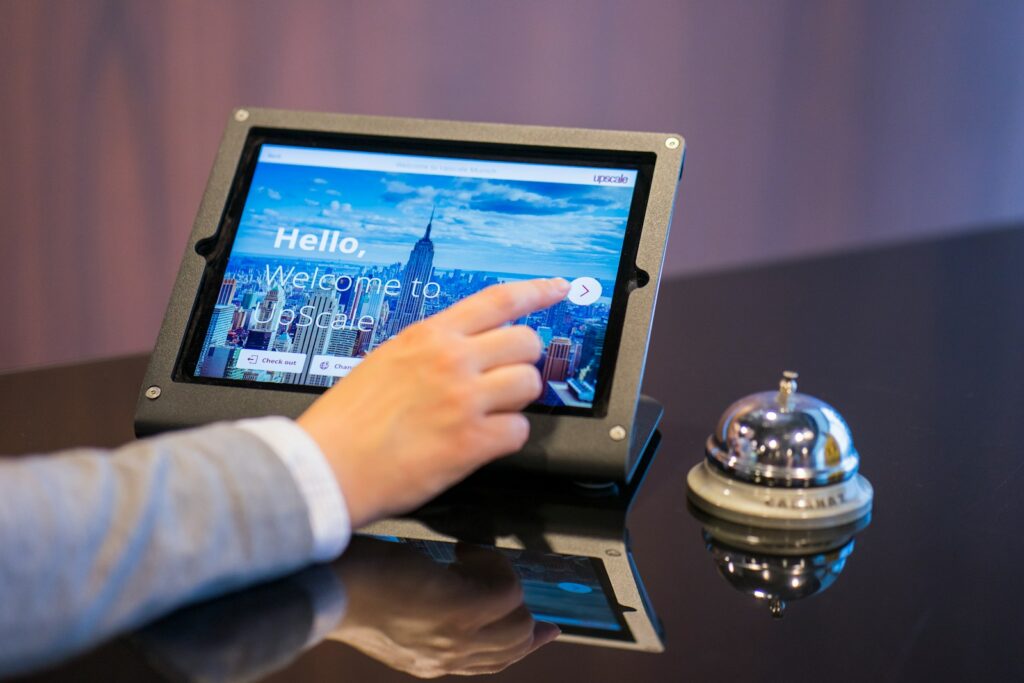
The French hotel market is expected to exceed 27 billion euros in revenue in 2025. After post-Covid turbulence, the sector is regaining solid but profoundly transformed momentum. Hoteliers today face diverse competition, fueled by the rise of Airbnb rentals, the increasing sophistication of campsites, and the expansion of aparthotels. This rivalry intensifies with the omnipresence of online booking platforms like Booking.com and Expedia.
These digital giants are capturing an increasing share of traffic and impacting the profit margins of independent establishments. To remain competitive, market players are pivoting towards a hybrid offering that blends technological expertise with eco-responsible commitments. This context demands constant agility to meet the new standards of modern hospitality while preserving profitability.
Do you need a hospitality market study? EPSIMAS can handle it for you!
The French hotel sector relies on a robust network of 40,016 active establishments as of March 2026. The hotel sector continues to grow, with 2,384 new establishments registered in 2025. This solid structure is supported by a considerable workforce, with over 172,628 full-time equivalents identified.
Growing by 4.28% in 2025 compared to 2024, the hotel industry posted revenue of more than 27.35 billion euros. Between 2016 and 2025, revenue in the hotel industry grew at an average annual rate of 5.53%. However, this growth is partly driven by rising prices in the sector. Between 2016 and 2025, prices in the hotel industry rose by an average of 34.6%. In 2025 alone, the market saw an average price increase of 4.12%.
This apparent revenue growth actually hides a major challenge: average revenue per establishment. This growth is driven on one hand by price increases, and on the other hand by the creation of new establishments. The revenue generated by hotels can therefore vary significantly from one site to another, depending on the location and concept.

The rivalry is no longer limited to neighboring establishments but extends to new hybrid accommodation models. The massive success of Airbnb rentals and furnished tourist accommodations now represents the primary competitive challenge for traditional hotels. This offering, which provides local immersion and often more attractive prices, captures a family and urban clientele that was once loyal to hotels. In 2026, the «Airbnb law» and municipal regulations are attempting to limit this expansion, but the impact on hotel occupancy rates remains significant.
Reliance on booking platforms like Booking is also reaching critical levels. These platforms invest nearly $7 billion a year in marketing—a marketing clout that exceeds the revenue of major groups like Accor. This digital dominance erodes hoteliers’ profit margins through commissions ranging from 15 % to 25 %. It also weakens the direct relationship with the customer, turning the hotelier into a mere service provider.
To counter this phenomenon, independent establishments are focusing on direct booking strategies and authenticity labels. They leverage high-performance CRM tools to build traveler loyalty, bypassing commission-based channels. In 2026, economic survival will depend on perfect mastery of multichannel distribution to remain competitive in a highly contested market.
Sources: Omnium Coach, Xerfi, Epsimas
Hotel clientele in 2026 will be fragmented into segments with very distinct expectations, forcing operators to be highly versatile. A major indicator marks this renewal.
Sources: Omnium Coach, INSEE, TripAdvisor, Omnium Coach
AI and environmental concerns are transforming the hotel industry in 2026. The market is no longer content with just selling an overnight stay, but offers an ecosystem of services where technology and sustainability unite.
Google searches for the word “hotel” peak in July and August, crucial months when anticipation and last-minute bookings flood the web just before departure. Conversely, the volume drops to its lowest in November, a lull period preceding the slight holiday season rebound and the massive planning surge in January.
Sources: L'Express Education, ESGluxe, Google Trends
The luxury segment continues to outperform, showing complete resilience in the face of inflation, unlike the mid-range and economy segments, which are more vulnerable. The hotel market as a whole, however, continues to grow. EPSIMAS’s projections for the sector point to an average annual growth rate of 3.3% between 2025 and 2030.
One of the major challenges remains the recruitment and retention of talent in a chronically strained sector. Institutions must clarify their «employer value proposition» and offer more flexible working conditions to attract new generations. The ecological transition is also accelerating, under pressure from regulatory obligations and consumer expectations. Hoteliers must invest heavily in thermal renovation and renewable energies to meet European standards.
Domestic political instability and global economic uncertainties could curb long-term investments. However, France's attractiveness remains a solid foundation, supported by major cultural events. This attractiveness must be contrasted, however, due to disparities between territories in France.
Sources: EPSIMAS
Hotels register under the following NAF code to conduct their business:
Class 55.10Z: Hotels and similar accommodation
This subclass includes:
This subclass does not include:
Source : INSEE
Don't hesitate to contact us to discuss your projects!
You can leave us your contact information via the Contact form, or book an appointment directly below.