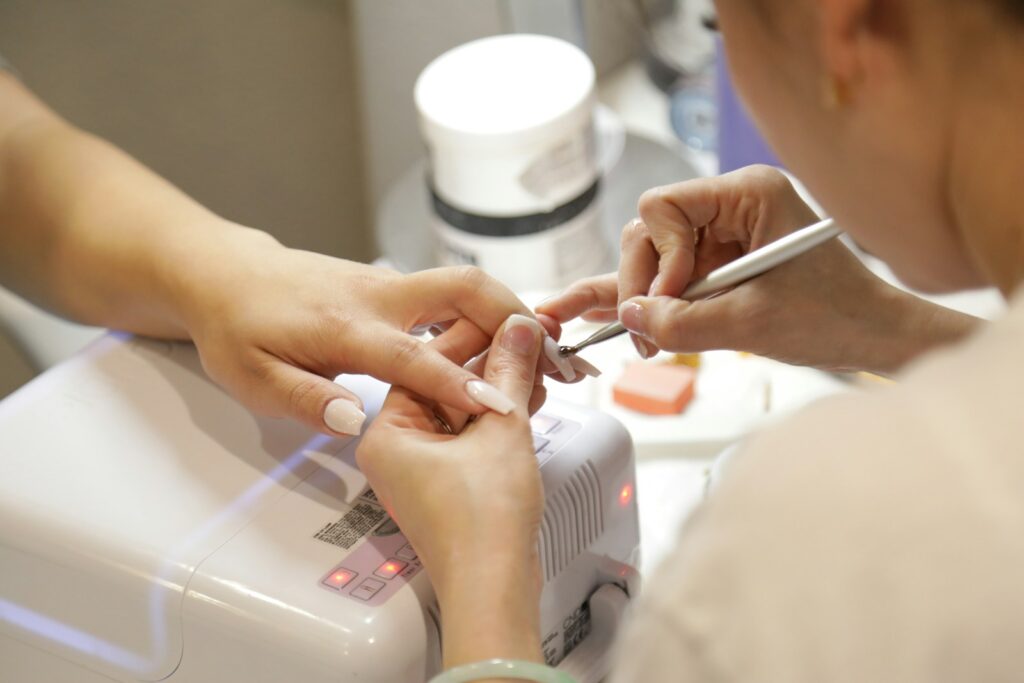
The beauty institute market in France is a historic pillar of the local economy. It encompasses all establishments offering aesthetic treatments, well-being services, and beauty advice. The activity is no longer limited to traditional aesthetics but extends to a holistic approach to health and relaxation.
This dynamic sector benefits from strong structural demand for self-care. Professionals meet a wide range of needs, from classic hair removal to advanced anti-aging technologies. Offerings are segmented among independent salons, national franchise networks, and the massive development of home-based care. By 2026,.
Do you need a market study for beauty institutes? EPSIMAS will take care of it for you!
The beauty salon market is showing remarkable economic strength, with revenue projected to reach 2.87 billion euros in 2025, according to preliminary estimates from Epsimas. With growth of 4.38% between 2024 and 2025, the sector’s revenue has been on an upward trend over the past ten years. The outlook remains favorable, with an anticipated annual growth rate of nearly 4% per year between 2025 and 2030.
In 2026, France had 116,944 active establishments registered under NAF code 96.02B. The entrepreneurial landscape is characterized by strong fragmentation: 9 out of 10 new entrepreneurs choose the micro-enterprise scheme to launch their business. This trend highlights the prevalence of businesses without employees, offering maximum flexibility to professionals.
The use of beauty services is inextricably linked to the pursuit of mental and physical well-being. In 2024, 64% of French people consider the pursuit of well-being to be the main driver of their beauty. This importance is reflected in a significant time investment, with French people devoting an average of 8.8 hours per week to their personal well-being and beauty routines.
Sources: Epsimas, INSEE, Bpifrance, Businesscoot

The clientele of beauty salons is undergoing a profound sociographic shift in 2026. While women have historically accounted for 85 % of the market, men are now gradually embracing these services. In fact, they have greater purchasing power at beauty salons: their average spending per visit ranges from 51 to 100 euros, compared to 26 to 50 euros for women. This male clientele is seeking technical treatments such as laser hair removal, recovery massages, and anti-aging facials.
New generations, driven by social media, dictate tomorrow's trends. 15-24 year olds spend an average of 190 euros per year on services and products, favoring innovation and hybrid concepts such as Mini-Kids Spas. Conversely, pre-seniors represent a strategic growth lever. Seeking «better aging» solutions, they favor non-invasive technologies and personalized care protocols.
For 73 % of customers, the primary reason for visiting remains relaxation and unwinding. At the same time, in-home beauty services appeal to an urban, active demographic looking to save time. This segment accounts for nearly 47% of the total market share, proving that convenience has become a selection criterion just as crucial as technical expertise.
Sources: Businesscoot, Bpifrance, Cesad
The current market offering revolves around five major areas of expertise that drive consumption: anti-aging treatments, hair removal, facial treatments, manicures/pedicures, and makeup. The sector is currently organized around three dominant business models that complement each other across the national territory.
The independent institutes form the bedrock of the profession. They capitalize on geographical proximity, ultra-personalized customer relationships, and artisanal expertise. These structures are often the first to adopt niche approaches or highly specific manual care protocols.
The Franchise networks and national chains (think Body Minute, Yves Rocher, or Guinot) structure the sector through industrialization of services. They attract an urban clientele with competitive prices, commitments-free subscriptions, and standardized protocols that.
The’home aesthetics is experiencing unprecedented growth, driven by the micro-entrepreneur status. This model offers complete flexibility for both the practitioner and the client, eliminating the constraints of travel and the fixed costs of a commercial space. This agility allows for coverage across the entire territory, from saturated city centers to the most isolated rural areas.
Hyper-specialization is becoming the new key differentiator. Many establishments are abandoning traditional versatility to focus exclusively on a single segment: nail bars, brow bars, or centers specializing in high-tech hair removal. This structure allows for precise responses to expert consumer expectations while optimizing operational costs and the profitability of treatment rooms.
Sources: Epsimas
The market is undergoing a major technological and ethical revolution. Innovation is transforming the customer experience through’AI, used for 3D skin diagnostics. The digitalization is imposed with the generalization of platforms like Planity or Treatwell, simplifying appointment booking.
Eco-responsibility is becoming a decisive purchasing factor: product composition is the third most important selection criterion for 36% of customers. 59% of consumers prefer environmentally friendly brands.
Under the impetus of representative organizations, the scope of skills Professionals in the aesthetics industry have gained ground, particularly in intense pulsed light and laser hair removal, slimming treatments, UV tanning services, and permanent makeup. Some of these procedures, previously reserved for doctors, can now be performed by aesthetic care professionals.
The trend of holistic wellness guide institutes toward approaches that restore vital energy. This ranges from mindful facials to a holistic approach including nutrition or naturopathy advice. This 360° vision of well-being allows practitioners to position themselves as true beauty life coaches.
However, the sector must contend with the rise of Do It Yourself, driven by home devices and online tutorials that allow for the performance of certain treatments at a lower cost.
The market exhibits seasonality marked by two major pillars. The highest peak occurs every year in December, driven by holiday preparations and widespread gift card purchases. A period of strong, continuous activity is observed in July and August, when searches for vacation-related services (waxing, pedicures, etc.) reach their peak. Conversely, online interest hits its lowest point of the year in October, signaling a calmer transition before the year-end rush.
Sources: Google Trends, BPIFrance, Businesscoot, Epsimas
Beauty salons are primarily registered under the following NAF code to conduct their business:
Subclass 96.02B: Beauty Care
This subclass includes
Source : INSEE
Don't hesitate to contact us to discuss your projects!
You can leave us your contact information via the Contact form, or book an appointment directly below.